Fun Facts
Knowledge for blowhards, braggadocios and connoisseurs
Yann Sommer's Chocolate Truck
In summer 2022, Yann Sommer honoured a curious promise. After Bayern defender Matthijs de Ligt made a spectacular goal-line clearance that prevented a Sommer concession, the Swiss goalkeeper sent an entire truck of Swiss chocolate to Munich. A gentleman's move that went viral and earned Sommer sympathy points well beyond the goal line.
"A German Team": Gladbach's Viral Twitter Account
Gladbach's English-language Twitter account became a viral phenomenon. Under the self-deprecating slogan "A German Team," the channel racked up international hits. Highlight: a Scottish pub that simply could not fit "Mönchengladbach" onto its announcements board. The club won worldwide sympathy that the team on the pitch could no longer deliver at that point.
Home Advantage in Budapest: CL Last 16 Without Fans
In the 2021 Champions League round of 16 against Manchester City, the first leg had to be moved to Budapest due to Covid travel restrictions. Gladbach officially had "home advantage" — in the Puskás Aréna, a Hungarian stadium, in front of zero spectators. Champions League doesn't get more absurd than that.
Borussia: The name Borussia is the Latin word for Prussia, to which the Lower Rhine city of Mönchengladbach (then: München Gladbach) belonged when the club was founded.
October 31, 1969 — where it all began: On Reformation Day, "the Foals" beat Alemannia Aachen 5-1 at home and overtook champions FC Bayern München (who lost 1-2 at home to Hertha BSC) to go top of the Bundesliga for the first time on matchday 11 of the 1969/70 season.
The cult ground: The Bökelberg stadium, Gladbach’s cult venue, was converted back into a football ground by the British occupiers after the Second World War. The unique hillside location gave the ground its legendary atmosphere — the steep stands pressed the crowd right against the pitch, creating an intimidating cauldron that visiting teams dreaded. When the club moved to the modern Borussia-Park in 2004, many fans mourned the loss of the Bökelberg’s character. The old ground was demolished and replaced by a residential development, but the name lives on in Gladbach folklore. To this day, older fans insist that the club lost something irreplaceable when it left the hillside — not just a stadium, but a spiritual home.
A "bank robber" named Helmut Grashoff: In July 1962, Borussia appointed Fritz Langner as new coach, who had won the western German championship with Westfalia Herne in 1959. But Langner’s most important contribution was not tactical — it was persuading his former player Helmut Grashoff to come to Gladbach. Grashoff, who worked at a bank in Herne (hence the nickname "bank robber"), turned out to be a revelation: a defender of exceptional reading of the game who became the backbone of the team that would eventually evolve into Weisweiler’s all-conquering side. Without Grashoff’s steadiness at the back, the glamorous attacking football of the Weisweiler era might never have been possible.
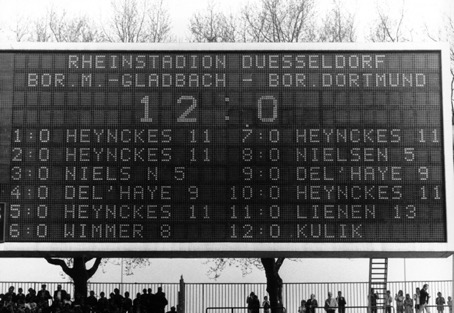
Highest Bundesliga win: Gladbach's record Bundesliga victory came with the 12-0 demolition on matchday 34 of the 1977/78 season. It was a futile win. The championship went to Köln, coached by Hennes Weisweiler, who still had the better goal difference. It was one of four(!) double-digit victories by the Foals.
Another record belongs to the Gladbach vs. Dortmund pairing: in the 1965/66 promotion season, there were five penalties in a single match. Dortmund won 5-4 at the Bökelberg, partly because Gladbach's Egon Milder hit the crossbar with the third Gladbach penalty in the 78th minute — sealing the first home Bundesliga defeat in club history.
1954 World Cup winner: Before the Bundesliga era, Gladbach briefly had a World Cup winner in their ranks. World Cup-winning goalkeeper Toni Turek wound down his career at the club in 1956 and 1957, making four appearances.
Negative streak against Bayer Leverkusen: Against their neighbours from the right bank of the Rhine, BMG hold a particularly painful record. From 1989 to 2004, they went 22 Bundesliga matches without a win against Leverkusen, including 16 draws — the longest "bogey team" streak in Bundesliga history as of December 2019.
Most double-digit wins: Borussia Mönchengladbach are the Bundesliga club with the most double-digit victories as of December 2019. Six times has a team scored ten or more goals in a Bundesliga match — four of those were by the Foals from the Lower Rhine.
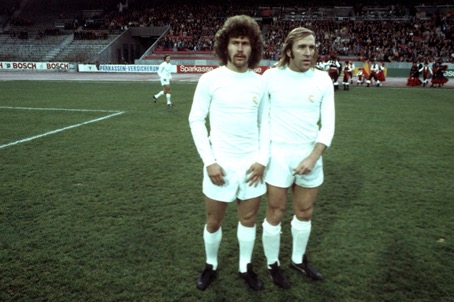
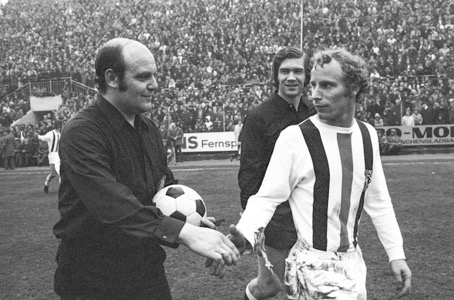
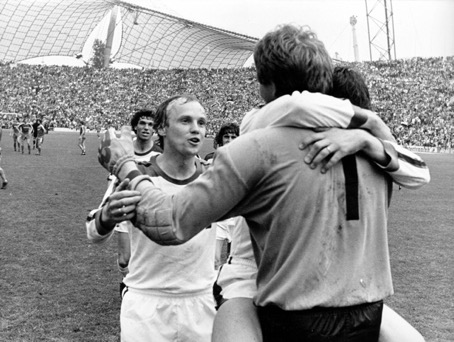
What Does "Borussia" Mean?
Borussia is the Latin name for Prussia. The club name derives from the Borussia brewery, in whose pub the club was founded in 1900. Several German clubs carry the Borussia name — most notably Borussia Dortmund — but only Moenchengladbach's connection to the original brewery gives the name a local story.
The Highest Bundesliga Victory
The highest Bundesliga victory belongs to Gladbach: a stunning 12-0 demolition of Borussia Dortmund on April 29, 1978, the final matchday of the 1977/78 season. It remains the most lopsided result in Bundesliga history and a source of endless pride for Gladbach fans — and endless embarrassment for BVB supporters.
The Boekelberg: A Temple of Noise
Before Borussia-Park opened in 2004, Gladbach played at the Boekelbergstadion — a cramped, atmospheric ground that generated intimidating noise from its steep terraces. The stadium's location on a hill gave it unique character. Visiting teams dreaded the narrow pitch and partisan crowd. Its demolition remains a source of nostalgia.
11-0 Against Schalke: The First Double-Digit Bundesliga Score
On January 7, 1967, Borussia Moenchengladbach created history by recording the Bundesliga's first double-digit scoreline: an 11-0 annihilation of Schalke 04. The match demonstrated the attacking philosophy that coach Hennes Weisweiler was building — a philosophy that would bring five championships in the next decade.
Record Holders in Multiple Categories
Gladbach hold several Bundesliga records that reflect their golden era: the highest victory (12-0 vs BVB), the first double-digit result (11-0 vs Schalke), and the most goals scored in a single Bundesliga season. These records have stood for nearly five decades and may never be broken in the modern, more defensively organized game.
European Record Night: 7-1 vs Inter Milan
On October 20, 1971, Gladbach produced one of the greatest European performances of all time, demolishing Inter Milan 7-1 in the European Cup. The Italian giants, two-time European champions, were humiliated at the Boekelberg. The result was later overshadowed by the infamous Coca-Cola can incident that led to controversy and a replay.
From Provincial Club to European Force
When the Bundesliga was founded in 1963, Gladbach were a second-division club from a city of barely 150,000 people. Within seven years, they were German champions. The transformation under Hennes Weisweiler from provincial obscurity to European football's elite remains one of the sport's most remarkable ascents.
The Fohlen-Elf — the Foals — played an attacking style that captivated neutral fans across Germany. While Bayern Munich built their dynasty through financial muscle, Gladbach did it through tactical innovation and youth development. Five Bundesliga titles in seven years (1970-77) established a legacy that the club has been trying to recapture ever since.
The Foals: Origin of the Nickname
Borussia Moenchengladbach's famous nickname Die Fohlen — the Foals — emerged in the late 1960s when coach Hennes Weisweiler consistently promoted exceptionally young players to the first team. Netzer, Vogts, Heynckes, Simonsen — all were teenagers or barely into their twenties when they became Bundesliga stars. The press began calling them the Foals, and the name stuck permanently, becoming one of German football's most recognizable club identities.
The 1970s Rivalry: Gladbach vs Bayern
The 1970s produced the greatest rivalry in Bundesliga history: Borussia Moenchengladbach versus Bayern Munich. Between 1969 and 1977, the two clubs won eight of nine championships between them. The contrast was stark — Bayern represented wealth, structure, and ruthless efficiency; Gladbach represented youth, flair, and attacking adventure. Matches between the two drew record television audiences and defined an era of German football that many still consider the Bundesliga's golden age.
The Udo Lattek Connection
Udo Lattek is the only coach to have won the Bundesliga with both Bayern Munich and Borussia Moenchengladbach — a feat that speaks to his tactical versatility and the intensity of the rivalry between the two clubs. Lattek won three consecutive titles with Bayern (1972-74) before moving to Gladbach, where he won two more (1976, 1977). His ability to succeed at both clubs during their most competitive era remains a unique achievement in German football history.
Borussia-Park: The Modern Home
When Gladbach moved from the atmospheric but antiquated Boekelberg to the new Borussia-Park in 2004, something was lost and something was gained. The modern 54,057-capacity stadium brought conference facilities, improved sightlines, and commercial revenue that the old ground could never generate. But the steep terraces, the proximity to the pitch, and the raw intensity of the Boekelberg atmosphere proved impossible to fully replicate. The move was necessary for the club's financial survival — but fans of a certain generation still speak of the old ground with an emotion that the new stadium cannot yet inspire.
Five Titles in Seven Years: The Statistical Dominance
Between 1970 and 1977, Borussia Moenchengladbach won five Bundesliga championships — a concentration of success that only Bayern Munich have matched in the league's history. The statistics are remarkable: in those seven seasons, Gladbach finished first five times, second once, and third once. They scored more goals than any other team in six of those seven campaigns. It was a period of sustained excellence from a city of 150,000 people that has no logical explanation beyond the genius of Weisweiler, the talent of the players, and a club culture that prioritized attacking football above all else.
Frequently Asked Questions
What does 'Borussia' mean in Mönchengladbach?
Borussia is the Latin word for Prussia. The name reflects the Prussian heritage of the region, not the city of Mönchengladbach itself.
What was Gladbach's biggest Bundesliga win?
Gladbach's record Bundesliga victory was a 12-0 demolition on matchday 34 of the 1977/78 season. It was a futile win, as it had no bearing on the championship race.
What was the Bökelberg stadium?
The Bökelberg was Gladbach's legendary home ground until 2004. Its unique hillside location created one of the most atmospheric grounds in the Bundesliga. It was demolished and replaced by residential housing.