Tragic
Those who suffered misfortune
Stefan Lainer's Cancer Diagnosis and Comeback
In December 2022, Austrian right-back Stefan Lainer was diagnosed with bone cancer in his shin. The news was a shock to the entire team. Lainer fought his way back; his comeback on the pitch became a symbol of solidarity and hope within the club — one of the most moving stories of this period, far beyond league tables and transfer balances.
The Injury Drama of Mamadou Doucouré
The career of the French midfielder was repeatedly derailed by severe injuries. Cruciate ligament tear followed cruciate ligament tear. Doucouré stands for the persistent bad luck that plagued the squad during this phase — great talent, permanently stopped by his own knees.
Florian Neuhaus: From International to Market Value Collapse
Once a German international, once courted by Bayern Munich and FC Barcelona. His market value rose to around 40 million euros. By March 2026, it stands at 3.5 million. Not an injury drama, but a creeping sporting decline — ground down between constant coaching changes, shifting systems and a rebuild that swallowed players like him. Under Seoane, there were reportedly personal differences that further reduced his playing time. Neuhaus also stands for a broader problem in Gladbach's recruitment: the club has tended to buy "nice guys" in recent years — impeccable in character, solid technically, but collectively too tame. On good days they play Bayern off the park. On bad days they let Union Berlin bully them out of the game.
Tim Kleindienst: The Open File
In the summer of 2024, Kleindienst arrived from 1. FC Heidenheim for eight million euros and was supposed to be what Gladbach had lacked for years — a robust, intelligent centre forward. One who holds the ball up, organises the attack and brings an edge. Kleindienst delivered immediately: goals, assists, a call-up to the German national team. He became the other face of Borussia — not tame, but uncomfortable. Then a serious injury tore him out of the 2025/26 season. Prognosis: around a year out. Without him, the already fragile squad collapsed offensively. Under Seoane, five games without a single goal. Whether Kleindienst fulfils the promise he showed before the injury remains one of the most compelling questions for Borussia's future.
Robert Enke — death by suicide: In 1999, Robert Enke left Borussia Mönchengladbach for Benfica Lisbon. From there he moved to FC Barcelona, Beşiktaş Istanbul and finally Hannover 96. In November 2009, Robert Enke took his own life. His death shook German football to its core and sparked a national conversation about mental health in professional sport.
Henning Jensen — death at 68: As a player, Henning Jensen won almost everything. Two German championships with Borussia Mönchengladbach (1975 and 1976), two Spanish titles with Real Madrid (1978 and 1979) and the 1980 European Championship with Denmark. The Dane died in 2017 at the age of 68.
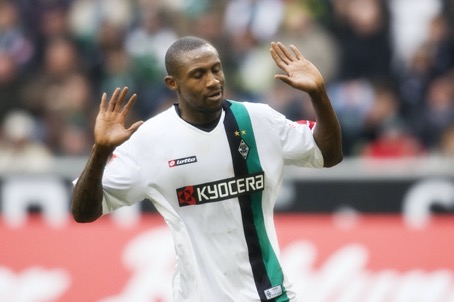
Steve Gohouri — death at 34: Steve Gohouri died at 34. The former Gladbach player had been missing for more than three weeks before his body was found in the Rhine near Krefeld in January 2016, according to police reports. The Ivorian defender had played for Borussia from 2009 to 2011, making 41 appearances. He was remembered as a gentle giant — physically imposing on the pitch but quiet and thoughtful off it. After leaving Gladbach, his career spiralled downward: lower-league clubs, financial difficulties, personal problems. His death, the circumstances of which were never fully explained, sent shockwaves through the German football community. Former teammates spoke of a man who had struggled to find his place after football, a story tragically common in the sport.
Marcelo Pletsch — the Brazilian enforcer: Marcelo Pletsch played for Borussia Mönchengladbach from 1999 to 2005. Towards the end of the 2004/05 season, he was diagnosed with testicular cancer — a devastating blow for a player still in the prime of his career. Pletsch, known for his uncompromising tackling and warrior mentality, faced his diagnosis with the same courage he showed on the pitch. He underwent surgery and chemotherapy, and the club and fans rallied behind him in a show of solidarity that transcended football. Though he eventually recovered, his career never regained its former trajectory. The Brazilian returned to his homeland, where he continued to play at lower levels, but the Gladbach fans never forgot him — to this day, his name appears in supporter tributes as a symbol of resilience.
Shmuel Rosenthal — the first Israeli: Shmuel Rosenthal was the first Israeli professional to play in the Bundesliga. In 1968, he represented Israel at the Mexico Olympics before joining Gladbach. His time at the club coincided with one of the most turbulent periods in German-Israeli relations, and Rosenthal carried the weight of that history on his shoulders. On the pitch, he was a skilful forward with excellent movement; off it, he faced prejudice and isolation that would be unthinkable today. His pioneering role in German football has only been properly recognised in recent years, as historians have documented the challenges faced by the first generation of Israeli players in the Bundesliga.
Karl Del’Haye — Bayern ruined his career: Before the 1980/81 season, European Championship winner Del’Haye moved to FC Bayern München for the then-record transfer fee of 1.3 million Deutschmarks. What should have been the crowning move of a brilliant career turned into a nightmare. At Bayern, Del’Haye was marginalised from the start — used sparingly, deployed out of position, and eventually frozen out entirely. The move destroyed a player who had been one of the most elegant midfielders in the Bundesliga. Del’Haye never recovered his form, and within two years his top-flight career was effectively over. The case became a cautionary tale about what happens when a player leaves a club that loves him for one that merely bought him.
Hans-Jörg Criens — the king of all super-subs: Hans-Jörg Criens died at 59 of a heart attack. The third-most prolific Bundesliga scorer (92 goals) in club history passed away eight days after his birthday at Christmas 2019. Criens never won a title, but scored decisive goals — a cult hero beloved for the moments that mattered most.
Frequently Asked Questions
What happened with Robert Enke and Gladbach?
Robert Enke left Borussia Mönchengladbach in 1999. On November 10, 2009, the Hannover 96 goalkeeper took his own life. His time at Gladbach was the start of a career that ended in tragedy.
Who was Steve Gohouri?
Steve Gohouri was an Ivorian defender who played for Gladbach from 2009 to 2011. In January 2016, his body was found in the Rhine near Krefeld. He was only 34 years old.